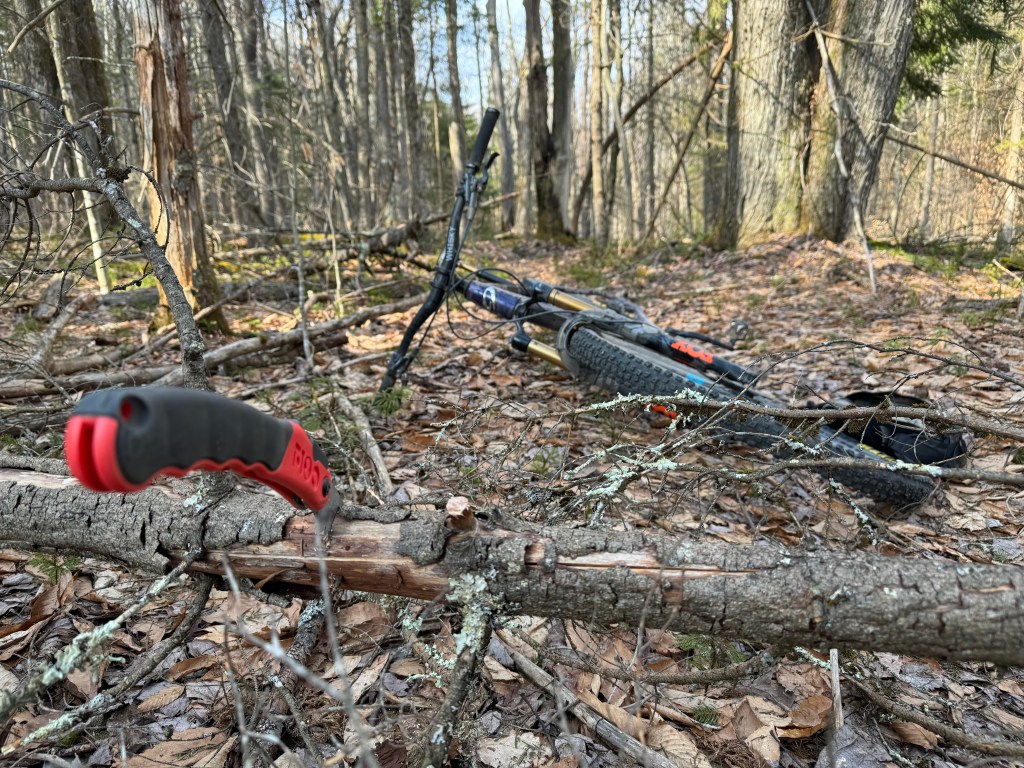
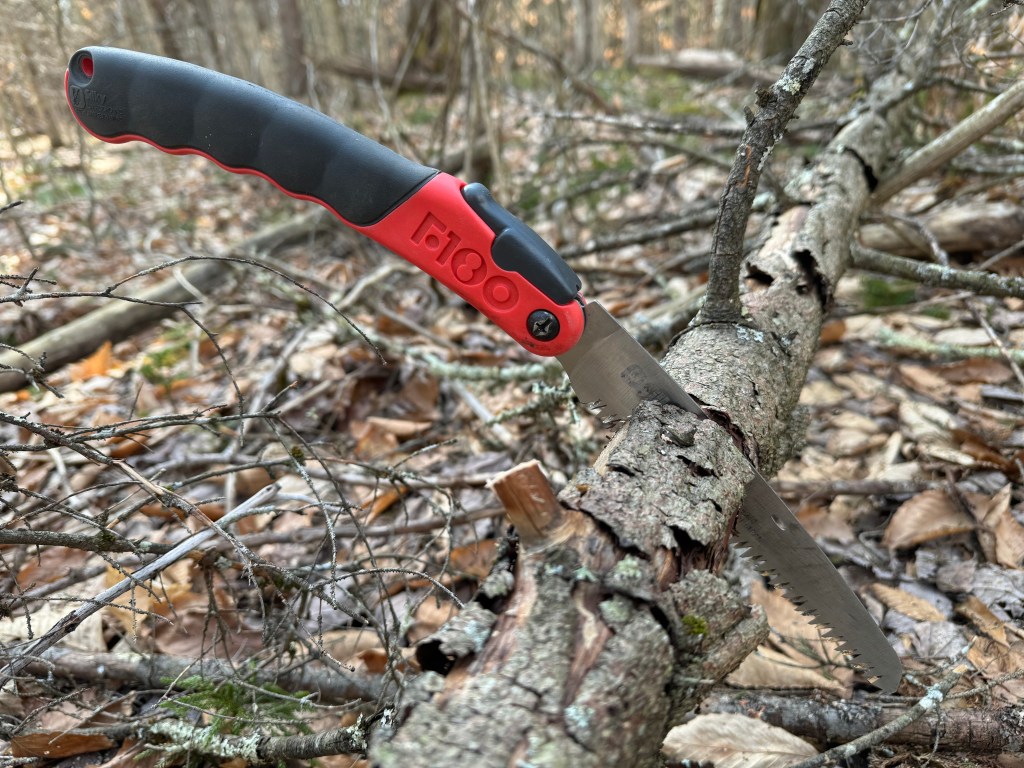
Here we are in March, and the snow has finally melted off the trails. The good news is we can finally get out on our mountain bikes, but the flip side is we can’t get a consistent ride in because of all the winter blow-down. Trails require love all year long, mostly corridor clearing. But the increased amount of post-winter care is obvious this time of year. Here are some simple principles for trail opening to take with you out on trail:
Principle 1: The Daily DIY
The easiest trail work out there is just to flick sticks off the trail tread! Almost anyone can do this and it truly is one of the most impactful things you can do to improve trail conditions. Pro Tip: use a walking stick to flick off trail debris, so you don’t have to bend down for every stick.

Principle 2: The Jargon
Know the corridor. The USFS offers a great resource for trail trainings, helping to define what it is that we are working to maintain and how to maintain them! Their Trail Construction and Maintenance Notebook has been a gold standard in the field for years. See the above image from the USFS, showing the standard clearing limits for a typical trail. Who you are clearing trail for and what kind of trail it is may have an affect on specific clearing limits. For post winter clean up, we are focusing on down fall and the smaller brush that have come down or been damaged because of it. Very simply put, take note to how wide the trail is, then clear just outside of those limits. You’ll notice above that the clearing limits are actually outside of the Trailway, not just the edges of the Trail Tread (or trailbed as they call it here). Pro Tip: if you are standing on center of the trail with your hand saw, reaching out and up is typically what you are looking to clear.
Principle 3: Proper Pruning
There is an entire trade related to proper care of trees and other woody plants, these folks are Arborists and they know a lot about Arboriculture. You need to know just a tiny amount of what they do a proper job out on trail.
Proper pruning is essential for two main reasons:
1. Cuts stubs really hurt when you fall on them!
2. Proper care helps do our part to keep our trail side anchor trees healthy and intact, which play a big role in keeping our trails in good shape.
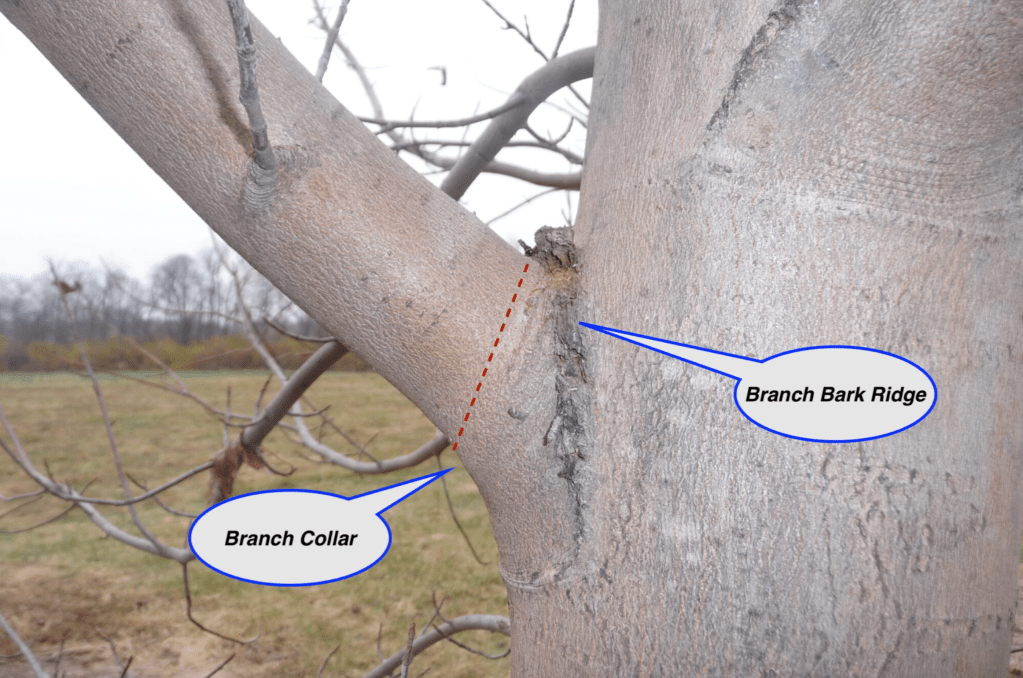
Pro Tip: Cut close to, but outside the growth collar. The main consideration when you need to prune trailside is where to cut branches reaching out into the trail. Cutting a branch too far from the main stalk or trunk leaves a hazard for trail users and is not ideal for the tree to grow over that now dead wood, leaving a space for rot and infection. Cutting past a branches bark ridge and growth collar (shown above in a helpful diagram from Purdue University) also does damage to the tree. Trees compartmentalize damaged areas, shutting off the area around damage, and growing around that dead tissue.
Principle 4: Bucking Downed Logs
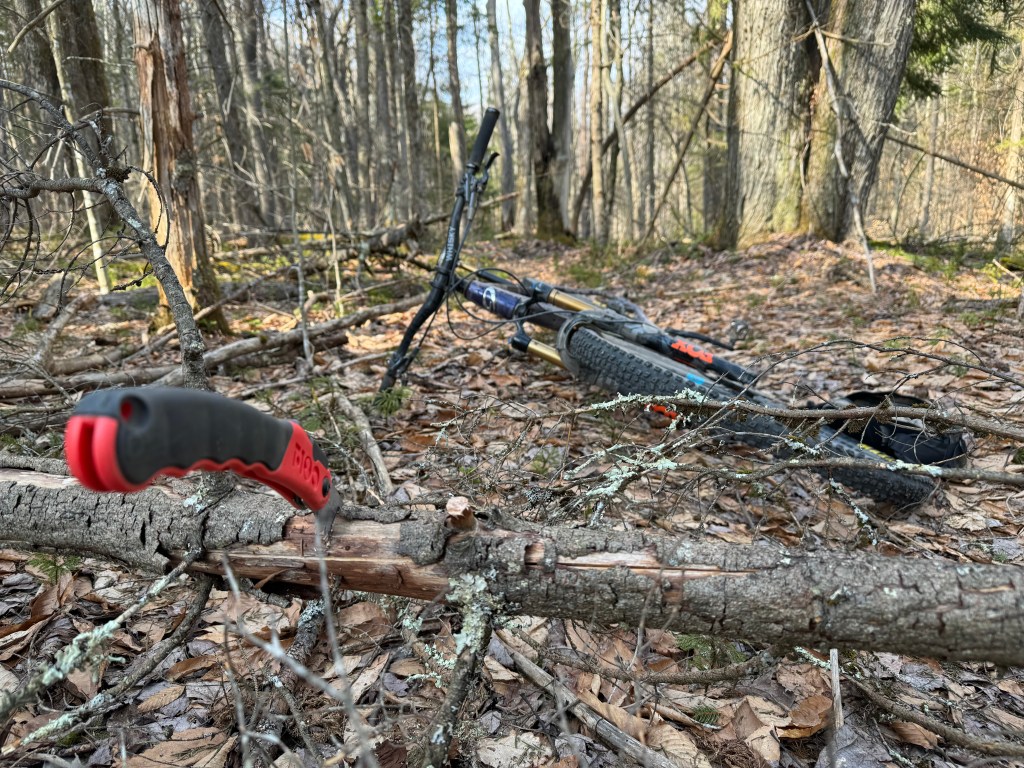
This is a common sight out on trail this time of year. Most downed material (in our woods at least) can be handled with a small folding hand saw. There are a lot of different sizes of hand saw available out there, but whatever size you choose, make sure the blade locks in the open position when cutting.
Understanding Bind is key to clean cuts.
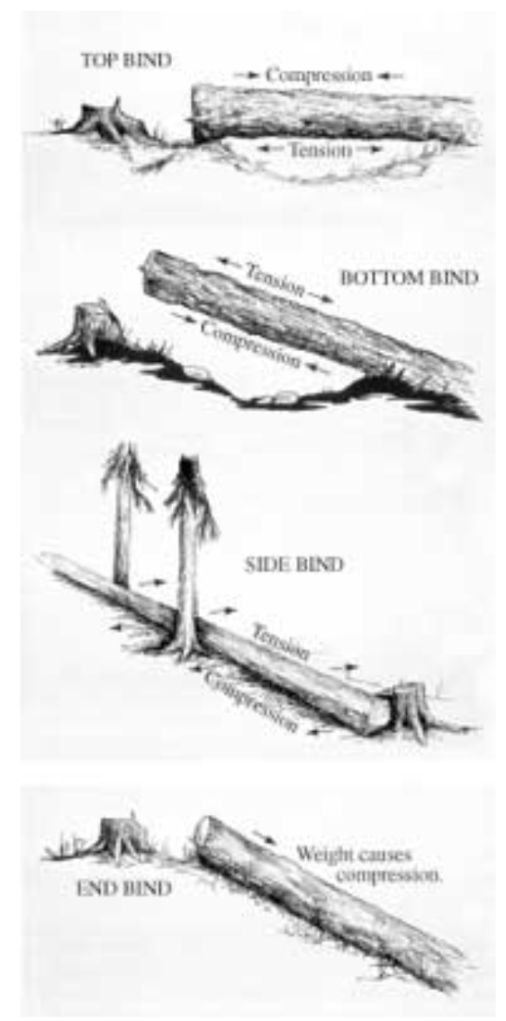
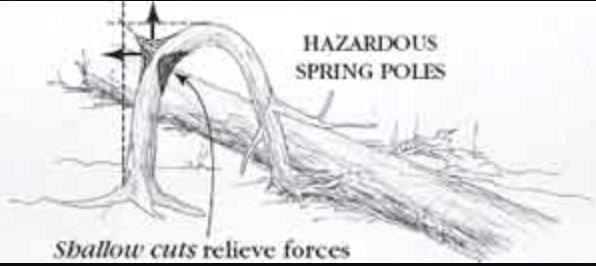
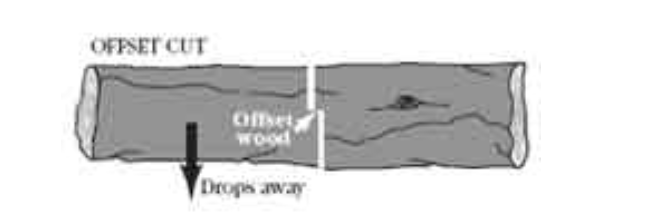
The above three diagrams, again from those fantastic USFS resources, shows bind, spring poles, and an offset cut. There are four different kinds of bind: Top, Bottom, Side, and End. You will often encounter top or bottom bind, but it can be one, two, or even all of those binds at once. Spring poles are an example of extreme bottom bind, and are common this time of year. Pro Tip: Understanding bind helps make efficient, safe cuts that won’t damage your saw.
An offset cut is a common way to handle simple cuts with a small amount of bind, like a small tree fallen across the trail. First, you make a small cut on the side with compression. Then, cut from the side with tension. The size of each cut and the amount of off set can be adjusted based on the individual log. Pay attention to the feedback from the log as you are cutting. It will tell you what it’s doing with sound and feel, as the cut opens and closes, or things can get more complicated.
Downed trees can be storing a lot of energy, which can make cutting (thus releasing that energy) extremely dangerous. The forest service and other land managers have spent a lot of time on developing and making training available to volunteers, and may (do) also have limitations on who can use what tools and do what work where. So always make sure you are doing work that you are trained to do and allowed to do while out on public lands.
Dig into more resources online to learn about:
USFS Saw Training
Tree Pruning Essentials from Purdue University
 Mountain State Trail Supply
Leave a comment